QSI RENU announces inaugural Catalyst Award winners
After a multi-stage review process, six projects have been selected for funding through the QSI RENU Catalyst Research Awards program. The projects are each led by two faculty members — one with engineering expertise and one with clinical expertise — and cover a broad range of targets in regenerative engineering.
The awarded projects from this inaugural funding cycle are summarized below.
Using Nanotherapy to Make Discarded Livers Transplantable
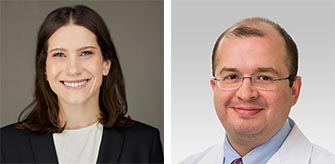
Co-Principal Investigators: Jacqueline Burke, Research Assistant Professor of Biomedical Engineering; Daniel Borja-Cacho, Associate Professor of Surgery (Organ Transplantation)
The field of liver transplantation is severely limited by a lack of suitable organs, leading to approximately 13 percent of waitlisted patients dying each year.
In their Catalyst Award project, Burke and Borja-Cacho will investigate a strategy to rehabilitate livers that are currently considered “unusable” — an approach that could one day save lives by significantly increasing the availability of transplantable livers.
Borja-Cacho is an expert in transplant surgery and normothermic machine perfusion (NMP), a technique that keeps blood and nutrients flowing through an organ at normal body temperature until it is transplanted. Burke, an expert in developing nanotherapies that modulate the immune system, will create an intracellular therapy that can be delivered using NMP to limit inflammation and improve overall cell health in livers that would otherwise be discarded.
The researchers will then use standard criteria to evaluate whether the livers become healthy enough to be transplanted. If successful, the approach could transform the field and increase the number of life-saving transplants that are possible.
Synthetic Melanins for Skin Regeneration
Co-Principal Investigators: Nathan Gianneschi, Jacob & Rosaline Cohn Professor of Chemistry, Materials Science and Engineering, Pharmacology, and Biomedical Engineering; Kurt Lu, Eugene and Gloria Bauer Professor of Dermatology

In this project, Gianneschi and Lu will advance their platform of synthetic melanin particles (SMPs) for use as topical treatments for skin stress and injury. They seek to develop a daily-use, regenerative cream that can counteract skin damage from the full range of insults, including UV radiation, from low levels to sunburn.
The Catalyst Award will support safety and efficacy studies in human skin samples, as well as the synthesis of high-grade, proprietary SMPs in QSI RENU’s Good Manufacturing Practices (GMP) facility.
Oxygenation Device for Neuroprotection
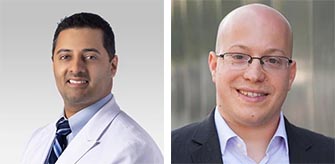
Co-Principal Investigators: Christopher Ahuja, Clinical Assistant Professor of Neurological Surgery; Jonathan Rivnay, Jerome B. Cohen Professor in Engineering, Professor of Biomedical Engineering and Materials Science & Engineering
Ahuja and Rivnay aim to develop a new device that can deliver oxygen to the central nervous system (CNS) to mitigate the effects of acute CNS injuries such as stroke, spinal cord injury or traumatic brain injury. Across these conditions, neurons die due to insufficient oxygen, contributing to long-term health issues that extend beyond the initial injury window.
Rivnay provides expertise in the development of microscale devices and implantable oxygenation systems, while Ahuja brings expertise in CNS injury pathophysiology, relevant research models and the clinical use of neurosurgical devices. Over this 18-month project, the team plans to prototype and optimize the device, conduct studies in both acute and chronic disease models, and test the safety and feasibility of sustained oxygen delivery.
Injectable Therapeutic for Abdominal Aortic Aneurysm
Co-Principal Investigators: Bin Jiang, Assistant Professor of Biomedical Engineering and Surgery; Mark Eskandari, James S. T. Yao Professor of Vascular Surgery and Chief of Vascular Surgery, Northwestern Medicine

Abdominal aortic aneurysm (AAA) is a dangerous condition in which the body’s largest artery weakens and expands, often without symptoms until rupture occurs. Currently, patients are monitored until surgery becomes necessary, as no medications exist to slow disease progression.
Through their Catalyst Award project, Jiang and Eskandari aim to develop an injectable therapeutic that delivers healthy mitochondria — the cell’s energy-producing structures — to inflamed vascular cells within the aneurysm wall. By restoring cellular function and reducing tissue damage, this approach has the potential to slow aneurysm growth and stabilize the weakened artery, extending the time before surgical repair may be required.
The award will support studies using laboratory-based models and human AAA tissue samples, as well as additional work to optimize storage conditions and define the shelf-life of the injectable therapy — critical steps toward future clinical translation.
Improving Outcomes After Glaucoma Surgery
Co-Principal Investigators: Guillermo Ameer, QSI RENU Director, Daniel Hale Williams Professor of Biomedical Engineering, Professor of Surgery; Angelo P. Tanna, Director of the Glaucoma Service and Vice Chair and Professor, Department of Ophthalmology

Glaucoma is the leading cause of irreversible blindness globally. When medical and laser therapies fail to control the disease, surgery is used to create a new drainage pathway to allow the egress of fluid, thereby lowering the pressure within the eye. Inflammation-driven formation of scar tissue where the aqueous humor fluid drains after surgery, however, causes 35 percent of these surgeries to fail within five years.
For their Catalyst Award project, Ameer and Tanna will investigate the use of a gel developed in the Ameer laboratory to improve outcomes following glaucoma surgery. The material is inherently antioxidative and has proven to relieve oxidative stress and modulate inflammation in other tissue engineering applications. The researchers believe these properties could reduce the formation of scar tissue that has limited the effectiveness of these vision-saving surgeries.
The grant will support the optimization of the material for eye surgery, development of a manufacturing protocol using QSI RENU’s GMP facility and preclinical studies to assess the long-term safety.
Noninvasive Mapping of Sub-Surface Skin Health
Co-Principal Investigators: Matthew Grayson, Professor of Electrical and Computer Engineering; Kurt Lu, Eugene and Gloria Bauer Professor of Dermatology

This Catalyst Award will support the development and testing of a noninvasive sensor that provides 3D mapping of sub-surface skin health, potentially preventing the progression of dangerous skin conditions such as bed sores and diabetic ulcers.
Current imaging technologies only capture ulcers once they have formed, but this first-of-its-kind device could trigger medical intervention at an earlier stage — revolutionizing preventative skin care. The Catalyst project will include the design and fabrication of first- and second-generation sensors, as well as studies to validate the sensors in both human tissue samples and animal models.