News

Yancy receives 2026 Herbert W. Nickens Award
October 2, 2026
QSI RENU member Clyde Yancy, an internationally recognized cardiologist, has been selected to receive the 2026 Herbert W. Nickens Award from the Association of American Medical Colleges. The award honors individuals whose work has advanced equal opportunity in medicine and improved health outcomes for underserved populations.
from Feinberg News
September 29, 2026
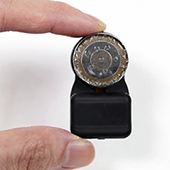
A research team led by John Rogers and Guillermo Ameer has developed a miniature, wearable sensor that detects wound infections before visual symptoms emerge — a breakthrough that could dramatically reduce severe complications, including amputations, for diabetic patients and others living with chronic wounds.
Rogers elected international fellow of Royal Academy of Engineering
September 28, 2026
QSI RENU member John Rogers has been elected as an international fellow of the Royal Academy of Engineering. Fellows are drawn from every specialty within the engineering and technology professions and are recognized for making exceptional contributions to their fields.
from McCormick News
Northwestern to launch $30 million center to unlock genome’s hidden code
August 31, 2026
QSI RENU is headquartering a new research center aimed at uncovering a hidden layer of information within the human genome. The Center for Genome Intelligence Engineering (GENIE) is being established through a $30 million National Science Foundation award and will be led by QSI RENU member Vadim Backman.
from Northwestern Now
QSI RENU researchers test nanoparticle treatment to save donor livers
July 24, 2026
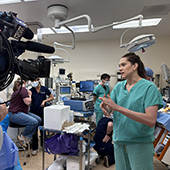
QSI RENU members Jacqueline Burke and Daniel Borja-Cacho are using nanoparticles to rehabilitate donor livers that would otherwise be discarded. WGN News covered their collaborative project, which could significantly expand the pool of organs available for transplantation.
from WGN News
June 26, 2026
Nayoung Kim will join Northwestern on July 1 as a QSI RENU Postdoctoral Fellow, co-advised by Nathan Gianneschi and Kurt Lu. In this interview, Kim explains how her current research connects to the work she plans to do at Northwestern, how making tofu sparked her interest in science, and how toying with different aspects of material design can enhance functionality.
June 24, 2026
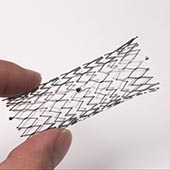
Directed by Igor Efimov, the Cardiovascular Engineering and Technology Center (CVET) will focus on advancing the fundamental understanding of cardiac arrhythmias, as well as developing biological and device-based therapeutic strategies to preserve or regenerate heart tissue.
May 20, 2026
QSI RENU member Bin Jiang recently received a National Institutes of Health (NIH) Replication Prize for proposing a strategy to make mitochondrial transfer reproducible. This approach could assist scientists in developing new mitochondrial therapies, understanding how they restore cellular function, and establishing more reliable standards for research across laboratories.

May 19, 2026
El Hadji Arona Mbaye is a PhD candidate in the Department of Biomedical Engineering and a researcher in QSI RENU member Jacqueline Burke’s laboratory. In this interview, Mbaye discusses his work on type 1 diabetes, how he became interested in immunoengineering, and his excitement for the upcoming FIFA World Cup.

April 2, 2026
Recently published work from QSI RENU members Guillermo Ameer and Cheng Sun — along with colleagues at Worcester Polytechnic Institute — was highlighted on the cover of the March 25 edition of Advanced Healthcare Materials. The research described a new strategy to stent and support the healing of blood vessels, an approach that could improve the outcome of surgical procedures that restore blood flow to the heart.
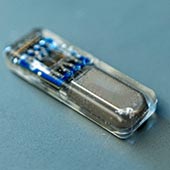
Implantable ‘living pharmacy’ produces multiple drugs inside the body
March 27, 2026
A multi-institutional team of scientists, co-led by QSI RENU member Jonathan Rivnay, has taken a crucial step toward implantable “living pharmacies” — tiny devices containing engineered cells that continuously produce medicines inside the body.
from Northwestern Now
March 17, 2026
Postdoctoral researcher Fang Tang was recently awarded a two-year fellowship from the American Heart Association to investigate the use of engineered mitochondrial transplantation to treat vascular injury. In this interview, Tang explains her proposed project, shares what she enjoys most about science, and describes her experience of working in QSI RENU member Bin Jiang's lab.

March 4, 2026
Six projects have been selected for funding through the QSI RENU Catalyst Research Awards program. The projects are each led by two faculty members — one with engineering expertise and one with clinical expertise — and cover a broad range of targets in regenerative engineering.
Pharma of the Future
March 3, 2026
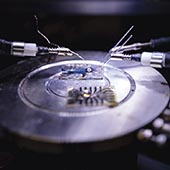
Northwestern Magazine profiled Jonathan Rivnay’s work to develop an implantable “living pharmacy” that can deliver therapeutics on demand. The article highlighted several applications for Rivnay's biohybrid devices, including collaborations with fellow QSI RENU members Colin Franz, Guillermo Ameer, and Shana Kelley.
from Northwestern Magazine
February 19, 2026
Jamin Lee is one of two inaugural recipients of the QSI RENU Postdoctoral Fellowship of Excellence in Translational Regenerative Engineering. In this interview, Lee describes the research on organoids that she plans to pursue during her fellowship, as well as her affinity for interdisciplinary science.
February 13, 2026
John Soukar is one of two inaugural recipients of the QSI RENU Postdoctoral Fellowship of Excellence in Translational Regenerative Engineering. In this interview, Soukar explains his research on mitochondrial therapeutics and what attracted him to the fellowship.

Ameer spotlights regenerative engineering in podcast appearance
February 11, 2026
In a recent podcast episode with RegMedNet, QSI RENU director Guillermo Ameer discussed the current state of regenerative engineering, including the importance of convergence research, several examples of impactful projects, and his advice for young scientists looking to enter the field.
Listen here
Nadig highlights Organ Transplantation Program
January 20, 2026
Satish Nadig spotlighted Northwestern Medicine’s Organ Transplantation Program in a recent video, including the program’s work with clinical trials, new technologies, and developing an international transplant exchange. Nadig is the director of Northwestern’s Comprehensive Transplant Center and a QSI RENU faculty member.
Watch the video

3D-printed biodegradable scaffolds for blood vessels
December 19, 2025
A research team involving QSI RENU members Guillermo Ameer and Cheng Sun has developed a new strategy to regenerate blood vessels, an approach that could improve outcomes for coronary artery bypass surgeries.
from McCormick News
December 5, 2025
A bone regeneration device using bioactive materials pioneered by QSI RENU director Guillermo Ameer was recently used in its first surgical case.

November 13, 2025
A research team led by QSI RENU member Jacqueline Burke is advancing a therapeutic that could significantly delay the progression of type 1 diabetes. With the help of a recently awarded grant from the National Institutes of Health, the team is now conducting studies to translate the therapy toward use in humans.
Jiang recognized with two awards
October 29, 2025
QSI RENU member Bin Jiang has received a 2026 Rising Star Award from the Biomedical Engineering Society’s Cellular and Molecular Bioengineering (CMBE) special interest group. The award recognizes early career independent investigators who have made outstanding impacts on the field. Jiang also earned a Scientific Impact Award from the Americas Chapter of the Tissue Engineering and Regenerative Medicine International Society (TERMIS-AM), which will support her travel to the TERMIS-AM conference November 9-12 in Detroit.
September 24, 2025
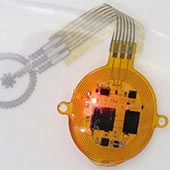
A QSI RENU research team has received a four-year, $4.7 million grant to develop an integrated system that can simultaneously accelerate wound healing, lower infection risk, and provide continuous in-wound monitoring.
September 2, 2025
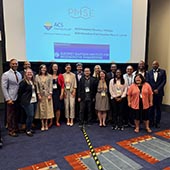
QSI RENU was well-represented at the all-day “Rock Stars of Regenerative Engineering” event August 19 at the American Chemical Society (ACS) Fall Meeting in Washington, D.C. Institute director Guillermo Ameer co-organized the event and chaired a panel discussion, and QSI RENU faculty member Xinlong Wang presented his research on a novel strategy for bone regeneration.
Rogers wins Royal Society’s Bakerian Medal
August 27, 2025
QSI RENU member John Rogers has won the Royal Society’s Bakerian Medal and Lecture, one of the premier awards given by the Royal Society of the United Kingdom. Rogers, who was elected a Royal Society Fellow in May, was honored for foundational scientific and engineering contributions to the field of bioelectronics.
from McCormick News
August 13, 2025
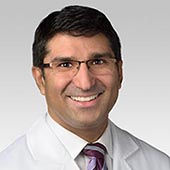
A research team led by QSI RENU member Satish Nadig has received a $200,000 grant from the American Society of Transplant Surgeons (ASTS) Foundation to test an innovative approach that could double the supply of liver tissue that is suitable for transplantation.
QSI RENU sponsors GRC on Biomaterials and Tissue Engineering
August 4, 2025
QSI RENU co-sponsored the recent Gordon Research Conference (GRC) on Biomaterials and Tissue Engineering, which took place July 27 to August 1 in Castelldefels, Spain. As part of the program, QSI RENU director Guillermo Ameer delivered an invited talk titled "Translational Regenerative Engineering: From Convergence Research to Pro-Regenerative Medical Products."
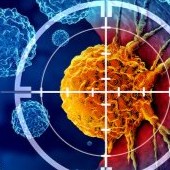
New Strategy Doubles Chemo Effectiveness
July 28, 2025
Restoring cellular memory prevents cancer cells’ ability to adapt to evade treatment
from McCormick News
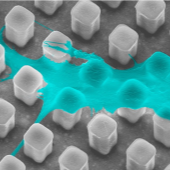
Controlling the Shape of a Cell’s Nucleus Could Unlock Better Bone Healing
July 15, 2025
Research shows how shape change of a cell nucleus can trigger regenerative signals, better implant performance
from McCormick News

Gianneschi Among Three Leaders in Nanotechnology to Receive 2025 Kabiller Awards
June 17, 2025
Now in its 10th year, Kabiller Prize is the world’s largest monetary award in the field.
from McCormick News

Systemically injectable therapy could prevent heart failure
April 25, 2025
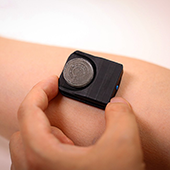
Your skin is breathing. This new wearable device can measure it.
April 9, 2025
First wearable device to gauge health by sensing gases coming from, going into skin.
from Northwestern Now
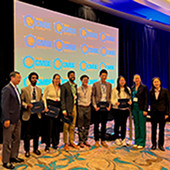
January 7, 2025
Brandon Applewhite was one of six postdoctoral researchers who received travel funding to present at the conference.

Novel ‘Scaffolding’ Biomaterial Improves Bladder Regeneration and Function
January 2, 2025
A team of Northwestern scientists has developed an electroactive “scaffolding” material that improves bladder tissue regeneration and organ function better than current techniques, as detailed in a recent study published in Nature Communications.
from Feinberg News Center
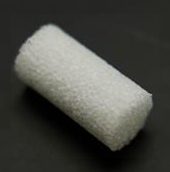
November 19, 2024
Biomaterial technology developed in Ameer Lab to receive FDA clearance for bone regeneration.
Guillermo Ameer to Receive Percy L. Julian Award
September 1, 2024

Bladder buzz: technologies to improve bladder surgery and monitoring
June 25, 2024

Xinlong Wang Receives Ryan Family Research Acceleration Fund Award
June 17, 2024

3D Printing and Citrate Biomaterials Could Allow Dissolvable Stents
June 14, 2024
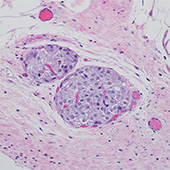
Antioxidant Gel Preserves Islet Function after Pancreas Removal
June 7, 2024
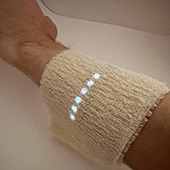
Smart Bandages That Heal Wounds Faster and Talk to Your Doctor Are on the Way
May 29, 2024
Researchers are working on bandages that allow remote monitoring and deliver treatment with zaps of light or electricity.
from Wall Street Journal
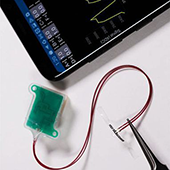
Sensor monitors bladder fullness
April 16, 2024
With NIH support, Drs. Guillermo Ameer, John Rogers, and Arun Sharma have developed a biodegradable sensor for simple, ongoing bladder function monitoring.
from National Institutes of Health

Urinary Implant Helps Alert When Patients 'Gotta Go'
March 26, 2024
New soft, flexible, battery-free implant co-developed at CARE helps patience with illness-related urinary incontinence.
from US News and World Report
Gotta Go? New Bladder Device Lets You Know
March 25, 2024

Developing citrate-based biomaterials: an interview with Guillermo Ameer
February 13, 2024
Speaking with RegMedNet, Professor Ameer discusses the development, translation, and widespread adoption of the citrate-based biomaterials his lab has developed, upcoming projects, and his commitment to promoting diversity and inclusion in regenerative medicine.
from RegMedNet

Taylor Brown receives AHA fellowship
January 4, 2024
Fourth-year PhD student and Center for Advanced Regenerative Engineering’s T32 Regenerative Engineering Training Program “graduate” Taylor Brown received an American Heart Association Predoctoral fellowship for 2 years for her project titled “Effects of sympathetic nerve signaling on vascular smooth muscle cell phenotype during vascular graft remodeling.” She will continue working with her T32 mentors, Drs. Bin Jiang and Mark Eskandari on this project. Congratulations Taylor!
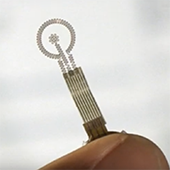
First transient electronic bandage speeds healing by 30%
February 22, 2023
Northwestern University researchers have developed a first-of-its-kind small, flexible, stretchable bandage that accelerates healing by delivering electrotherapy directly to the wound site.
from Northwestern Now