Non-contact sensor detects wound infections before symptoms appear
Researchers at Northwestern University have developed a miniature, wearable sensor that detects wound infections before visual symptoms emerge — a breakthrough that could dramatically reduce severe complications, including amputations, for diabetic patients and others living with chronic wounds.
Unlike conventional bandages and experimental “smart” dressings that must physically touch fragile, healing tissue, this new wireless device hovers just above the wound bed, where it captures and analyzes the vapors that are naturally emitted from the skin. These tiny plumes of gas provide real-time insight into how well the wound is healing and whether a bacterial infection is present.
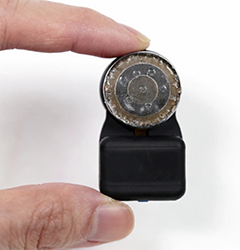
This research was published Sept. 29 in the journal Proceedings of the National Academy of Sciences (PNAS) and was co-led by John Rogers and Guillermo Ameer, both members of the Querrey Simpson Institute for Regenerative Engineering (QSI RENU).
“By measuring the gases directly above the skin, we can continuously interrogate the wound microenvironment without disturbing the healing process,” said Rogers, founding director of the Querrey Simpson Institute for Bioelectronics (QSIB) and the Louis Simpson and Kimberly Querrey Professor of Materials Science and Engineering, Biomedical Engineering and Neurological Surgery at Northwestern.
“The device functions as a sensitive artificial ‘nose’ and moisture gauge, providing continuous, quantitative data on bacterial burden and skin barrier restoration. It provides a foundation for personalized, remote wound care that patients can wear safely at home.”
The device was first described in a Nature paper published last year that demonstrated its ability to differentiate between healing processes in healthy and diabetic mice with skin wounds. This work builds on that foundation by showing how the sensors can provide early infection detection and monitor how infected wounds heal over time.
In laboratory testing, the device accurately identified the proliferation of Staphylococcus aureus — the bacteria that causes staph infections — long before the bacteria clustered into visible biofilms. Similarly, in a study of diabetic mice, the sensors identified infected skin wounds and provided information on infection severity and the effectiveness of different treatments.
Chronic wounds are especially challenging to manage for patients with diabetes. Poor circulation and impaired immune responses often cause diabetic foot ulcers to heal slowly or not at all, leaving them susceptible to dangerous infections. Bacteria culture tests take days to yield answers, and visits to the clinic provide only infrequent snapshots of healing.
In this context, the researchers believe their continuous monitoring technology could be transformative by enabling timely intervention in treating chronic wounds. If clinicians can identify the precise moment an infection begins — and verify when it subsides — they can prescribe targeted therapies promptly and avoid the overuse of antibiotics.
“Visual and odor inspection remains the gold standard in wound care, but by the time redness, swelling, or fluid are apparent to the naked eye, the bacteria have already colonized,” said Ameer, founding director of QSI RENU and the Daniel Hale Williams Professor of Biomedical Engineering and Surgery at Northwestern.
“If infection can be detected at a very early stage, physicians can start treatment sooner and reduce the risk of digit or limb amputations due to chronic, non-healing wounds that often become infected. I believe this wound monitoring technology, integrated with pro-regenerative biomaterials that accelerate wound healing such as those we’re developing at QSI RENU, will enable what I call precision diabetic foot ulcer management in the clinical setting and at home, improving patient care.”
In collaboration with Dr. Raymond Montoya II, a foot and ankle surgeon at Northwestern Medicine, the research team is now planning a pilot study in humans to evaluate the safety and effectiveness of the device for monitoring wound closure.
“Early, accurate diagnosis of infections can be paramount in saving lives,” Montoya said. “Useful application of this technology will transform limb salvage protocols and update standards of care. I'm very excited about this potential in my practice.”