Cardiovascular Engineering and Technology Center launches as QSI RENU affiliate
"We’re looking at strategies to keep (heart) tissue alive for longer periods of time, but also to develop novel pharmaceuticals and electrotherapies for cardiac regeneration."
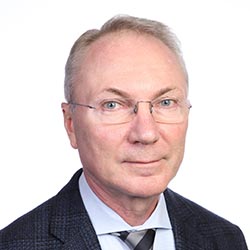
Igor Efimov, CVET Director
Igor Efimov believes the era of regenerative engineering breakthroughs has finally arrived for patients with heart disease, the leading cause of death worldwide. As director of the newly launched Cardiovascular Engineering and Technology Center (CVET), he’s eager to be part of it.
“It’s a very exciting time to be in this regenerative engineering field, because we’re now starting to see some success stories in clinical trials and relevant animal models after 20 or 30 years of working on these challenges,” said Efimov, a Professor of Biomedical Engineering and Medicine (Cardiology) at Northwestern. “These success stories will multiply in the years to come.”
CVET will serve as a collaboration hub bringing together experts in bioelectronics, cardiovascular engineering, materials science, cardiac genomics, physiology, and machine learning, among other fields. The center will focus on advancing the fundamental understanding of cardiac arrhythmias, as well as developing biological and device-based therapeutic strategies. It will operate as an affiliate research center of the Querrey Simpson Institute for Regenerative Engineering at Northwestern University (QSI RENU).
“We are excited to establish a new center within our institute focusing on advancing cardiovascular research via regenerative engineering,” said Guillermo Ameer, director of QSI RENU who is also the Daniel Hale Williams Professor of Biomedical Engineering and a Professor of Surgery at Northwestern. “CVET will provide an opportunity to consolidate our cardiovascular-relevant expertise, foster collaboration, and advance innovation to improve patient care and quality of life after a cardiovascular event."
Efimov’s research group works with the Gift of Hope Organ & Tissue Donor Network to procure human hearts — either those that were rejected for transplantation, or diseased hearts removed prior to a patient receiving a new one. This enables the team to study heart disease and test new therapeutic candidates in human tissue rather than animal models or cell lines.
One initial focus of the center, Efimov said, is extending the current window for heart transplantation beyond six hours. Currently, cardiac muscle cannot be preserved longer than that, leading to many potentially life-saving organs being unused.
“We can take cells from a patient, reprogram them to create new heart cells, and create a tissue,” Efimov said. “Those engineered tissues can be sustained for weeks or even months, so we’re trying to bridge that gap and preserve actual cardiac tissues long-term as a high-throughput platform. We’re looking at strategies to keep the tissue alive for longer periods of time, but also to develop novel pharmaceuticals and electrotherapies for cardiac regeneration.”
CVET will work on integrating bioengineered heart tissue (or cardiac “patches”) with human heart tissue and studying how the tissues align in terms of mechanics, metabolism, and electrophysiology. This will provide a powerful platform for the discovery and translation of new devices and therapies.
Efimov came to Northwestern from George Washington University in 2022, in part because he was interested in initiating or continuing collaborations with other NU faculty. For example, he has worked with Ameer on developing and testing electrically conductive biomaterials to promote recovery after heart attack; John Rogers on creating the world’s smallest pacemaker; and Elizabeth McNally on understanding the genetic mutations implicated in heart disease and regeneration.
Efimov envisions CVET incubating and advancing similar interdisciplinary projects.
“With these collaborations and the exchange of technology and ideas, the speed with which we can take fundamental developments and bring them to a relevant disease model in the human heart is really accelerated,” he said. “That’s the strength of this approach.”